At £225 a bottle, Squerryes’ Patience 2014 is a bold statement of intent. After 108 months on its lees and a further two years in bottle after disgorgement, it represents more than a decade of patience, investment and faith in the potential of English sparkling wine. James Viner meets ninth-generation owner Henry Warde to discover what makes Squerryes’ prestige cuvée worth the wait – and the price…
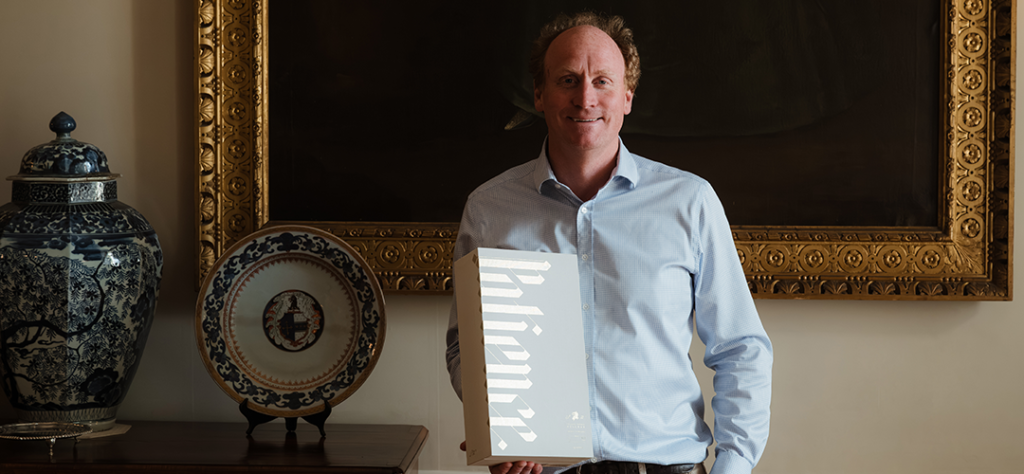
Named after Henry’s ancestor Sir Patience Warde (1629–1696), Squerryes’ new wine connects three centuries of family history with a vineyard planted in 2006. But heritage alone doesn’t make a £225 bottle of wine. The proof, inevitably, is in the glass.
I asked Henry about Patience, Squerryes’ evolution and the long-term business of building an English wine estate…
Henry, let’s cut to the chase: what makes a bottle of English sparkling wine worth £225?
At Squerryes, the answer starts with something you can’t buy more of: time. Patience 2014 spent nine years on its lees before disgorgement, followed by two more years in the bottle. It is the first wine in Squerryes’ prestige collection – and a bold statement that a vineyard planted just 20 years ago can compete at the top end of the market.
Patience has been a long-held idea: not just to create a Squerryes wine, but to release something only when it feels ready. If you’re prepared to wait, you can create something with real depth and a strong sense of place.
Patience 2014 is about taking the long view. Is that also how you run Squerryes?
Squerryes has always been about more than wine. It starts with our family motto, ‘Licet Esse Beatis’, meaning ‘it is permitted to be joyful’, and extends to the place, the people, the history and the hospitality that bring all those elements together.
What gave you confidence that Patience 2014 could sit comfortably at £225?
Patience was never priced by benchmarking against other wines. The starting point was whether the wine justified being released at all. It represents more than ten years of ageing, extremely limited volumes and a decade of assessment. Ultimately, the question was whether we believed it was an exceptional wine, and the response we’ve received suggests others think so too.
Patience 2014 spent more than a decade ageing. What did that time add to the wine?
Patience spent 108 months ageing on its lees, allowing it to develop greater complexity, texture and depth. The bright fruit character of the 2014 vintage has evolved into something more layered and expressive, while retaining the freshness and structure that come from our chalk soils. The extended ageing wasn’t about creating something old, but about giving the wine time to become the very best version of itself.
Is Patience 2014 the culmination of a journey or the beginning of a new one?
It’s a bit of both. Patience is the culmination of more than a decade’s work, but it’s also the beginning of a new project. It was always intended to be the start of a continuing series of exceptional wines rather than a one-off release.
What first made you think Squerryes could become a wine estate?
The catalyst was a 2004 visit from a Champagne house, which identified similarities between our chalk soils and those of Champagne. Once we understood the quality of the site, my father and I felt it was an opportunity too good to ignore. We saw wine as a way of creating something enduring that future generations could continue to build upon.
Today the vineyard covers 21 hectares and produces wines with a clear sense of place. What excites me most is that we’re still learning. Every harvest teaches us something new about the site, and we continue to see how well our chalk soils and cool climate suit the classic sparkling wine varieties: Pinot Noir, Pinot Meunier and Chardonnay.
We produce vintage Brut, Rosé, and Blanc de Blancs wines every year.
What do people most misunderstand about starting and running an English vineyard?
People underestimate how long-term and capital-intensive the business is. You’re making decisions today whose results may not become apparent for ten years or more. Add weather, farming and the realities of running a business, and a vineyard becomes a very different proposition from the romantic image many people have of it.
VISIT SQUERRYES
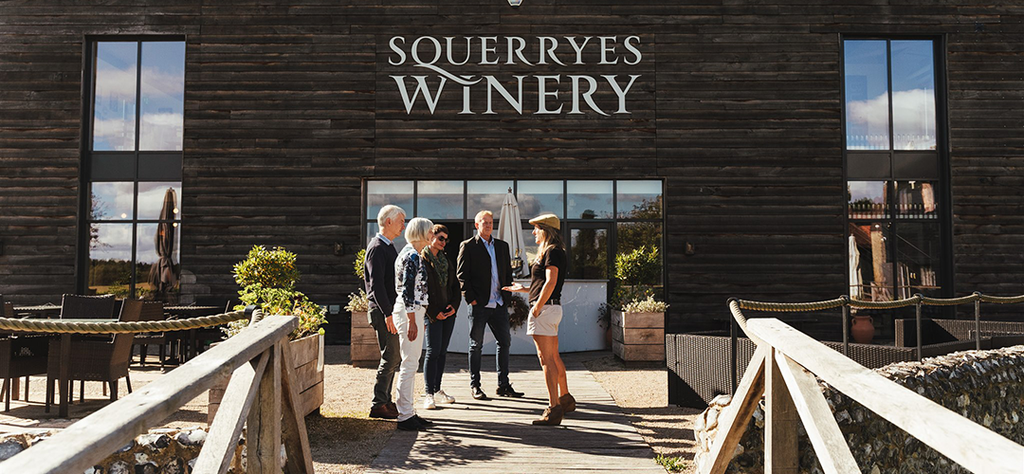
Around a 30-minute drive north-west of Tunbridge Wells, Squerryes has a fantastic restaurant and offers a striking setting for corporate events and visitor experiences.
Address: Beggars Lane, Westerham,
Kent, TN16 1QP
Website: squerryes.co.uk/patience
Instagram: @squerryes